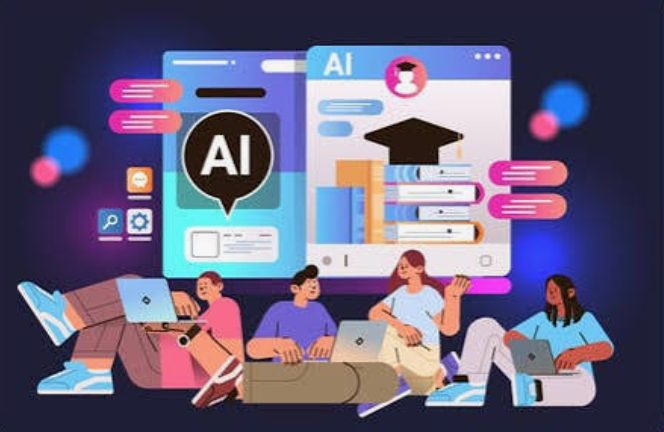
Every student knows the feeling: a deadline at midnight, a research paper due in the morning, and a pile of unread chapters on the desk. The traditional study model relies on fixed office hours, limited library access, and the assumption that help arrives only when the clock allows. That assumption no longer holds. With the rise of cloud-based tools and intelligent algorithms, the concept of an ai assistant for students has moved from convenience to necessity. It is not about replacing human tutors or professors. It is about filling the gaps that exist outside the classroom—the 2 a.m. confusion, the weekend problem set, the sudden realization that you do not understand a core concept from last week’s lecture.
What makes a modern study companion genuinely useful is its ability to operate without judgment and without fatigue. An ai assistant for students does not get tired after ten questions. It does not sigh when you ask for the third explanation of the same theorem. It does not check the clock. Instead, it provides consistent, patient, and structured responses—whether you are reviewing calculus derivatives, drafting a comparative essay, or generating flashcards for a biology exam. The value is not in the intelligence alone, it is in availability. That is the core of the 24/7 promise.
Now, consider the practical environment where this assistance lives. Students juggle multiple devices: a laptop for writing, a tablet for reading, a phone for quick checks. Files get scattered. Versions multiply. A PDF saved on one device is inaccessible on another. This is where cloud storage becomes the quiet backbone of effective study. When you pair an ai assistant for students with reliable file management, you eliminate friction. You ask a question, and the AI can reference material you have stored—provided that material is accessible. That is why selecting a robust platform matters. TeraBox offers substantial free cloud storage, which means your lecture slides, past exam papers, and research notes are all in one place, ready to be retrieved when the AI needs context. The integration is not flashy, it is functional. You save time not just in answering a question, but in finding the right document to ask about in the first place.
But let us be precise about what an ai assistant for students cannot do. It cannot read your syllabus for you if you have not uploaded it. It cannot guess the specific requirements of a professor’s grading rubric unless you provide that information. It cannot make ethical decisions about plagiarism for you. The tool is as effective as the input it receives. This is an important distinction, because many users expect magic. They expect a system that knows their entire academic history without context. That expectation leads to disappointment. A realistic approach involves treating the AI as a highly capable research partner, not an oracle. You bring the questions, the materials, and the critical thinking. The AI brings pattern recognition, quick retrieval, and endless patience.
Trust is another pillar of this ecosystem. When you rely on an ai assistant for students, you trust it to be accurate, or at least transparent about uncertainty. Good systems will flag when they are not sure, when they are generating a hypothesis rather than citing a fact. You should verify, cross-check, and use the AI as a starting point for deeper investigation. Similarly, trust in the storage layer is non-negotiable. You do not want your term paper or personal notes compromised. This is why choosing a service with clear privacy policies matters. TeraBox, for instance, has positioned itself as a straightforward option, with generous capacity that supports the heavy file loads typical of a college term. It does not claim to be the most feature-rich platform, but it delivers where it counts: space, accessibility, and simplicity. For a student, that reliability translates to less time troubleshooting and more time learning.
Let us examine how a typical session might unfold. You have three research papers from different courses, stored in your TeraBox account. You open your study tool and ask for a comparison of methodologies used in those papers. The ai assistant for students scans the documents, identifies key terms, and produces a summary table—though, in text form, it will present the comparison as structured paragraphs. You notice a contradiction in one paper’s findings. You ask for clarification. The AI suggests potential reasons for the discrepancy, citing statistical limitations or sample size issues. You then ask for alternative sources to support your argument. The AI provides titles and authors, but you still need to locate those sources. Because you have a high-capacity cloud storage, you can save those PDFs immediately, organize them into a folder, and continue your analysis. The loop is closed: ask, retrieve, store, refine.
The pedagogical benefits extend beyond convenience. An ai assistant for students encourages iterative learning. Instead of reading a chapter once and moving on, you can test yourself repeatedly. You can ask the AI to generate practice questions from your notes. You can ask for simpler explanations if a concept is dense. You can even request an outline for a potential essay topic, then argue against that outline to strengthen your own reasoning. This active engagement correlates with better retention. It is not passive consumption, it is a dialogue. And because the AI has no ego, you can push back, ask for alternatives, and change your mind without social friction.
There are, of course, limitations regarding originality. An ai assistant for students can synthesize existing information, but it cannot produce novel academic contributions on its own. It cannot conduct original experiments or ethnographic fieldwork. It cannot replace the human element of curiosity that drives new knowledge. What it can do is accelerate the preparation phase. It helps you get to the frontier faster, so you spend your energy on thinking, not on typing repetitive queries or searching through disorganized files. This is the pragmatic value proposition: less grind, more insight.
Security considerations should not be overlooked. When you upload course materials to any cloud service, you are entrusting that provider with your intellectual property. A responsible user reads the terms of service. A responsible provider offers encryption and transparent data handling policies. TeraBox has made its name on large free quotas, which is appealing to budget-conscious students. However, you should still back up critical files locally and avoid storing sensitive personal identification data in any cloud, regardless of the provider’s reputation. The ai assistant for students is a supplement to your workflow, not a replacement for your own diligence.
Consider the social dimension. Study groups remain valuable because of the exchange of ideas and the accountability of meeting times. But not every student has access to a study group at 3 a.m. or during a holiday break. An ai assistant for students serves as a bridge during those solitary moments. It can help you prepare questions for the next group session, highlight gaps in your group’s collective understanding, and even simulate opposing viewpoints for a debate practice. When you return to the group, you are better prepared, which elevates the entire team’s performance. This synergy between individual AI use and collaborative human study is often overlooked but highly productive.
Let us be honest about the challenge of motivation. Software does not make you sit in a chair. An ai assistant for students can provide answers, but it cannot force you to open the app. The discipline still comes from you. What the tool does offer is a lower barrier to starting. When you know that help is instant, you are more likely to initiate a study session. That initial push is frequently the hardest part. Once you have asked five questions, you are in a flow state. The AI sustains that momentum by providing rapid feedback. This is not trivial, behavioral science shows that immediate rewards reinforce habits. Response speed matters.
Now, the question of cost. Free tiers exist for many services, but they often come with limits—daily query caps, reduced functionality, or watermarks. A premium subscription might be justified, but only if you are using it consistently. Before paying, assess your usage patterns. If you primarily need simple definitions and basic explanations, free versions suffice. If you need deep document analysis, long-form content generation, or integration with large datasets, consider a paid plan. TeraBox, in particular, offers a large free storage allowance, which reduces the pressure to upgrade for storage reasons alone. You can spend your money on advanced AI features rather than on basic file space. This allocation of resources is a smart move for any student.
Potential pitfalls exist. Over-reliance on an ai assistant for students could lead to a decline in critical thinking if you simply accept answers without questioning them. Some students might upload entire textbooks and ask for summaries, skipping the reading process entirely. This is a misuse. Reading itself is a skill that requires practice. Summaries are useful for review, not for first exposure. The AI should be used as a supplement to deep reading, not a substitute. You still need to engage with the original text, struggle with the ideas, and form your own connections. The AI can help verify your understanding, but it cannot experience the struggle for you.
Another issue is context blindness. An ai assistant for students does not know your personal learning style unless you tell it. You might be a visual learner who benefits from diagrams and analogies, or you might prefer formulaic, step-by-step explanations. The AI will adapt to your instructions, but you must provide those instructions. Learning to prompt effectively is a skill in itself. Start with clear descriptors: “Explain this concept using a sports analogy,” or “Break down this theorem into five sequential steps.” The quality of the output improves dramatically with prompt specificity. This is a form of metacognition—thinking about how you think—which is beneficial in its own right.
For international students, language barriers add another layer. An ai assistant for students can translate complex terms, explain cultural references in textbooks, and help with academic writing in a non-native language. This is a form of accessibility that was unimaginable a decade ago. The AI does not judge your accent or your grammar mistakes. It simply offers corrections and alternatives. This reduces anxiety around participation, which is a major hurdle for many learners. Cloud storage complements this by allowing you to keep translations, vocabulary lists, and comparison notes in organized folders, accessible from any device.
Let us address the idea of authority. No one trusts a random source just because it is generated by AI. You must verify claims against reputable academic databases, peer-reviewed journals, or your own experimental data. The ai assistant for students is a starting point, not an endpoint. When the AI references a statistic, ask for the original source. When it suggests a theoretical framework, check if the framework aligns with your course syllabus. This critical attitude is what separates a good student from a passive consumer. The AI does not make you smarter, it makes you more efficient. The intelligence is still yours to apply.
In terms of content creation, the AI can assist with brainstorming title ideas, structuring an argument, or refining a thesis statement. But the final voice must be your own. Academic integrity policies are clear: submitted work must reflect your original thought. Using an AI to draft an entire essay and then submitting it as your own is a violation at most institutions. Using an AI to help you outline, ask clarifying questions, or identify weak spots in your logic is acceptable, provided you disclose it if required. Know your institution’s policy. Ignorance is not a defense.
Why, then, does TeraBox specifically appear in this conversation? Because file retention is a silent productivity killer. You lose time when you cannot find a note, when a download fails, or when syncing errors corrupt a file. A storage service with ample free space and straightforward sync reduces these interruptions. TeraBox has gained traction among students for exactly that reason—not for any magical AI capability, but for solid storage that does not run out at the worst moment. The AI assistant handles the thinking, TeraBox handles the keeping. Together, they form a practical stack for academic survival.
The future will likely bring tighter integration between storage and AI. Imagine asking your assistant to “find the graph from my economics lecture from last Tuesday and explain the y-axis annotation.” That requires both semantic understanding and file access. We are not quite there with seamless multi-modal retrieval, but the pieces are in place. TeraBox’s role is to be the repository, the single source of truth for your academic artifacts. Once files are organized, retrieval becomes faster, and the AI becomes more contextually aware. This synergy is where we are heading.
For now, the practical advice is simple. Use an ai assistant for students for the tasks that are repetitive, time-consuming, or require immediate recall. Use cloud storage to keep your materials synchronized and safe. Use your own judgment to evaluate outputs and integrate them into your unique learning path. Do not expect the tool to do the learning for you. Expect it to remove friction, so you can devote your mental energy to what matters: understanding, creating, and remembering.
The landscape of education is shifting. Static syllabi and one-size-fits-all lectures are giving way to adaptive tools that respond to individual needs. The student who embraces these tools without losing sight of personal agency will have a distinct advantage. The ai assistant for students is not a crutch, it is a compass. And the storage layer is the bag that carries your maps. Pack wisely.
FAQ
1. Is an ai assistant for students allowed during exams or graded assignments?
No. Unless explicitly permitted by your instructor, using any AI tool during an exam or for a final graded submission violates academic integrity policies. You can use it for studying, drafting practice, and review, but always disclose any assistance if rules require it. Check your syllabus or ask your professor directly.
2. What is the difference between using an ai assistant for students and a regular search engine?
A search engine gives you a list of links that you must open, read, and synthesize yourself. An AI assistant provides direct, synthesized answers with explanations and follow-up capability. It can adapt to your level of understanding and maintain context across multiple questions. However, search engines often provide access to the latest web content, while some AI models have a training cutoff date. Use both—search for sources, use the AI to process them.
3. How does TeraBox help students who already use an ai assistant for students?
TeraBox provides cloud storage with a large free capacity, which is useful for storing lecture PDFs, research articles, and personal notes. This means your source materials are available on any device, so when you ask the AI a question, you can quickly access and reference the relevant files. It reduces the time lost to file management and ensures your study materials are safely backed up.
The Short Version
- The traditional study model relies on fixed office hours and limited library access, which is becoming outdated due to the rise of AI tools.
- An AI assistant for students enhances learning by providing 24/7 availability, allowing for instant help outside regular classroom hours.
- Pairing an AI assistant with cloud storage like TeraBox facilitates efficient study by ensuring access to lecture slides, past exam papers, and research notes in one place.
- While an AI assistant can assist with research and questions, it cannot autonomously understand syllabi or ethical issues without user input.
- Effective use of an AI assistant requires users to provide context and information, as it functions best as a research partner rather than a comprehensive knowledge source.
- The AI’s ability to enhance iterative learning encourages active engagement with study materials and promotes better retention among students.